
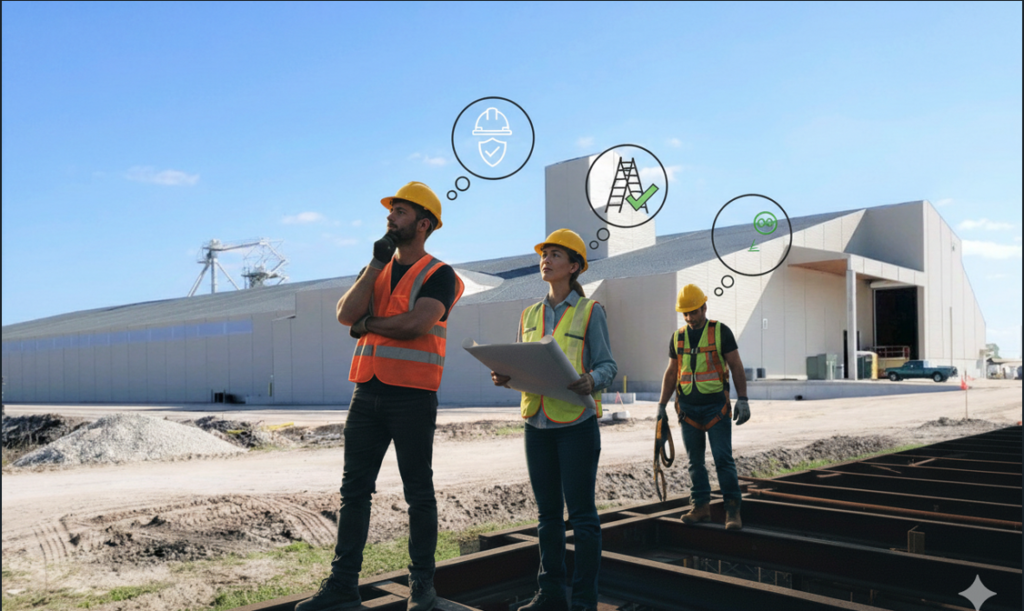
Why this matters
“Caught-in / between” hazards are one of OSHA’s Fatal Four causes of death in construction. These incidents happen when a worker is crushed, pinned, or caught between two objects — often with little warning and severe consequences.
What is a Caught-In / Between Hazard?
A caught-in / between hazard occurs when a worker is:
- Crushed between equipment and a fixed object
- Pinned between moving parts
- Buried or trapped by collapsing materials or soil
- Caught in rotating or moving machinery
Common Jobsite Examples
- Trenching and excavation cave-ins
- Working between heavy equipment and walls, trailers, or structures
- Being caught in moving parts (conveyors, rollers, belts, gears)
- Loads shifting while being hoisted or rigged
- Working under suspended loads
- Working around formwork or shoring that is not secured
How These Incidents Happen
- No proper protective systems in trenches
- Standing in blind spots of equipment
- Equipment operating without guards
- Poor communication between workers and operators
- Materials not secured or stacked properly
- Rushing or working in tight spaces without a plan
How to Prevent Caught-In / Between Injuries
✔ Stay out of pinch points and equipment swing areas
✔ Never enter a trench without proper shoring, shielding, or sloping
✔ Maintain eye contact with equipment operators
✔ Use a spotter when working around moving equipment
✔ Never stand under suspended loads
✔ Keep machine guards in place, never remove or bypass them
✔ Secure and properly stack materials
✔ Lockout/Tagout equipment before maintenance or repair
What to Do If You See a Hazard
- Stop work immediately
- Warn others in the area
- Notify your supervisor
- Do not resume work until the hazard is corrected
At Stueve Construction, safety isn’t just a checklist—it’s our most vital asset. We believe that protecting our people is the foundation of every successful project. By moving beyond mere compliance and fostering a true culture of accountability, we ensure that every worker returns home safely every night. Through relentless training, top-tier PPE, and an open-door policy on hazard reporting, we turn “safety protocols” into a competitive advantage. When we prioritize the well-being of our team, we don’t just avoid delays; we build a legacy of excellence and trust.
Learn more about Stueve Construction and the solutions we bring to you:
Liquid Fertilizer and Ag Chemical Buildings
Dry Fertilizer River and Port Terminals